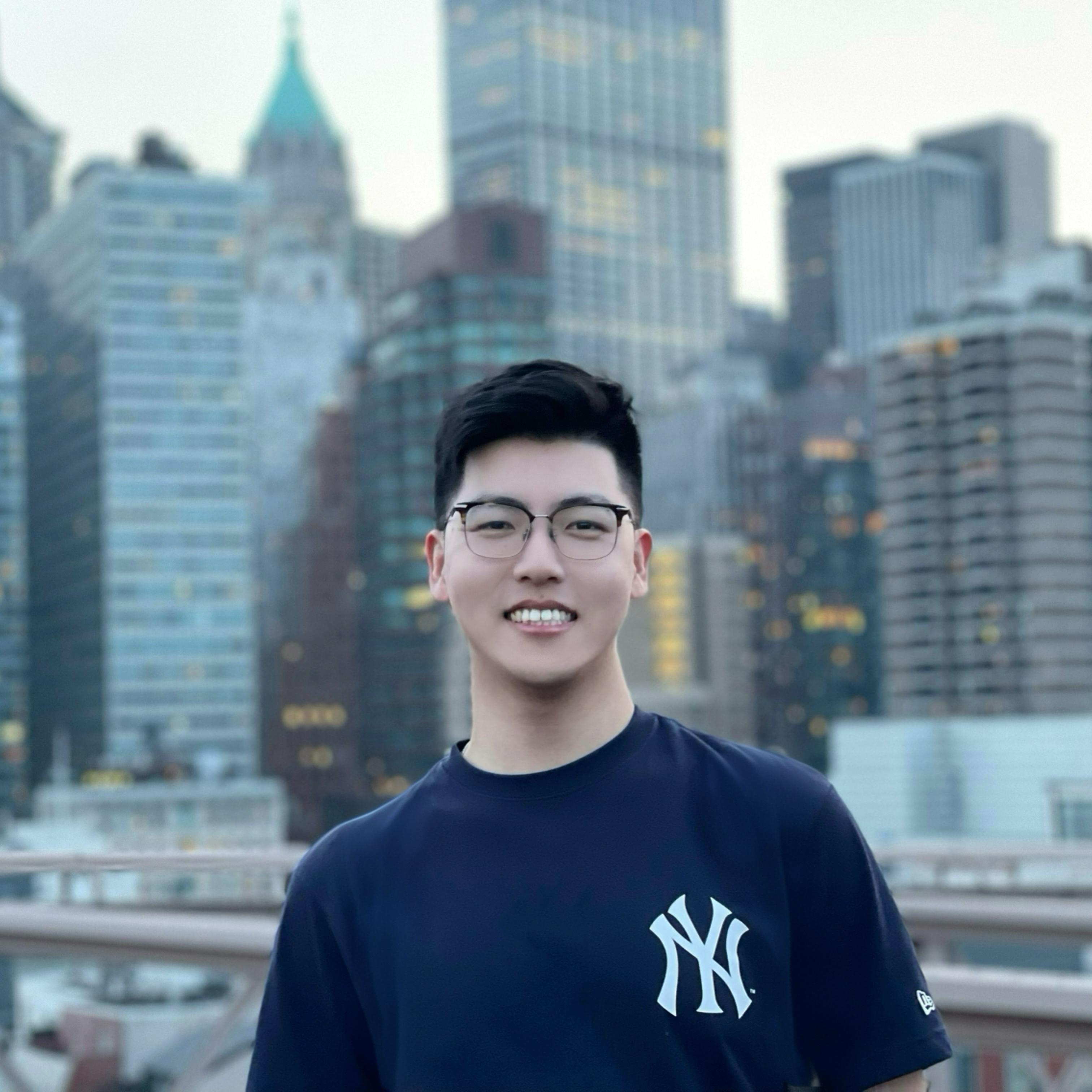
Hi! I’m an assistant professor in Department of Artificial Intelligence at Westlake University. Previously, I was a postdoctoral researcher at Stanford University, working with. Prof. Ruijiang Li. I got my Ph.D. at King Abdullah University of Science and Technology (KAUST) in 2025 under the supervision of Prof. Xin Gao. I got my M.S. and B.S. at Jilin University in 2021 and 2018 respectively, supervised by Prof. Ying Xu.
I am actively looking for highly motivated PhD students, research assistants, visiting students, and postdocs. For more informations, please see here.
李昊阳,西湖大学工学院人工智能系特聘研究员、助理教授、博士生导师,国家级青年人才。曾为斯坦福大学医学院博士后,合作导师为李瑞江教授。他于2025年在阿卜杜拉国王科技大学(KAUST)计算机系获得博士学位,导师为高欣教授;于 2021 年和 2018 年分别在吉林大学获得硕士和学士学位,导师为徐鹰教授。他致力于构建 AI虚拟器官,聚焦多模态、三维、物理与时序的空间生物学,旨在突破观测性研究的固有局限,实现疾病演化预测与个体化干预决策。现已在Nature Machine Intelligence、Nature Communications (23’,24’,25’)、Science Advances、Cell Systems、IEEE TMI、和MICCAI等顶级期刊和会议上发表20余篇论文。其中一篇Nature Communications一作论文被编辑选为Editor’s Highlight,并入选”生物技术和方法”领域50篇最佳论文。此外,他曾为耶鲁大学和斯坦福大学的访问学者。他还担任包括沙特内政部、沙特阿美石油公司等多所机构的数据分析课程助教和客座讲师,并担任Nature Biomedical Engineering、Nature Communications、Bioinformatics、ICML、NeurIPS、ICLR等顶级期刊和会议审稿人,也担任 BMC Bioinformatics和 Frontiers in Public Health 等多个期刊的编委和客座编辑。
Research Directions
Dr. Li’s research is organized around AI Virtual Organ (AIVO): a generative computational counterpart of a real patient’s organ, on which the questions that cannot be asked of the patient are asked in silico. It grows along a strictly hierarchical capability axis, from descriptive (what is the organ now) to predictive (what happens next, and under perturbation) to prescriptive (what should we do). His group advances this vision along five parallel fronts:
(1) Multimodal Spatial Biology. Aligning and translating across H&E, spatial omics, medical imaging, and clinical text, so that expensive or physically unmeasurable modalities can be inferred from the cheapest and most ubiquitous projection of tissue.
(2) 3D Spatial Biology. Reconstructing whole-organ three-dimensional volumes from two-dimensional sections, and modeling the emergence from molecule to cell to niche to tissue.
(3) Physical Spatial Biology. Encoding mechanics, conservation laws, and transport as priors, so that the virtual organ is not merely visually plausible but physically self-consistent.
(4) Temporal Spatial Biology. Turning destructive snapshots into continuous trajectories, and predicting how tissue evolves under time, injury, and perturbation.
(5) Downstream applications. Precision oncology, in silico drug screening, tissue aging, and regenerative medicine, each turning something previously unmeasurable or untestable into something computable.
Work Experience
- Department of Artifical Intelligence, Westlake University 08/2026 - present
Assistant Professor - School of Medicine, Stanford University 09/2025 - 07/2026
Postdoctoral researcher (Working with Prof. Ruijiang Li) - School of Medicine, Stanford University 06/2024 - 09/2024
Visiting PhD student (Working with Prof. Nima Aghaeepour) - School of Public Health, Yale University 06/2023 - 09/2023
Visiting PhD student (Working with Prof. Hongyu Zhao)
Academic service
- Associate Editor
Frontiers in Public Health,BMC Bioinformatics - Editorial Board Member
Molecular & Cellular Bioinformatics, World Jounral of Radiology - Guest Editor
Biomedical Informatics (Special issue: spatial transcriptomics) - Reviewer
Nature Biomedical Engineering, Nature Communications, Bioinformatics, ICLR (2025, 2024), ICML (2024, 2025 (AI4Science workshop)), NeurIPS (2023, 2024), AAAI (2022), UAI (2022), ICONIP (2022), SIGKDD (2022), MICCAI (2025, 2021) - Organizing Committee Member
International Conference on Bioinformatics (InCoB2022), International Workshop on Cancer Systems Biology (ICSB 2018, 2019, 2021, 2022)
Teaching
- Teacher (CST1002 Introduction to Computer Science and Programming)
Westlake University - Guest lecturer (CS220 Data Analytics)
Saudi Aramco - Teaching assistant (CS220 Data Analytics)
Ministry of Interior, Saudi Arabia
KAUST - Teaching assistant (Bioinformatics)
CCF DragonStar, Jilin University - Teaching assistant (Computational Biology)
Jilin University